

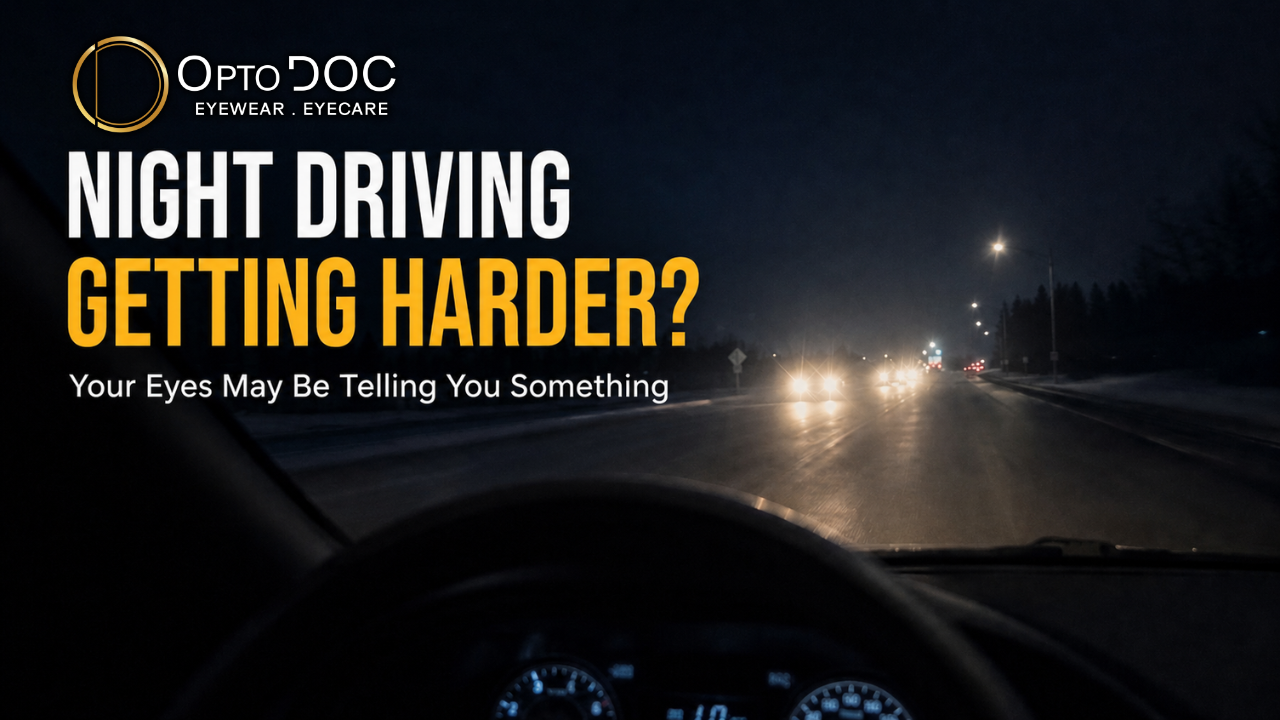
Why Does Driving at Night Get Harder as We Get Older?
You can see perfectly well during the day.
Then the sun goes down.
Suddenly, road signs aren’t quite as easy to read, oncoming headlights seem incredibly bright, and judging what’s ahead requires a little more concentration.
If nighttime driving doesn’t feel as effortless as it once did, you’re certainly not the only one.
Why Is Seeing at Night More Difficult?
Our eyes perform best when there is plenty of light available.
At night, your visual system has much less information to work with. Details become harder to distinguish, colours become less obvious, and contrast between objects and their surroundings decreases.
Driving adds another challenge: you’re moving quickly through an environment filled with headlights, streetlights, illuminated signs, reflections, and areas of darkness.
Our Eyes Change With Age
Just like the rest of the body, our eyes naturally change throughout life.
As we get older, the eye may become less efficient at adapting between bright and dark environments. That can make transitions—such as looking toward bright headlights and then back toward a dark roadway—feel more difficult.
You may also find that you need more light than you once did to see fine details comfortably.
Why Do Headlights Suddenly Seem So Bright?
Glare is one of the biggest complaints people have about nighttime driving.
Bright headlights surrounded by darkness create a dramatic difference in illumination.
Instead of seeing only the vehicle approaching you, you may notice halos, streaks, reflections, or an uncomfortable burst of brightness.
Your Prescription Could Be Part of the Problem
A small prescription change may not seem significant during a bright afternoon.
At night, however, reduced lighting can make minor vision issues much more noticeable.
This is one reason someone might say, “I see fine during the day, but I hate driving at night.”
An eye exam can determine whether your current prescription is still providing the clarity you need.
Astigmatism Can Affect Nighttime Vision
Astigmatism can cause light to focus unevenly within the eye.
For some people, this becomes particularly noticeable when looking at headlights, traffic signals, or other bright points of light against a dark background.
Proper vision correction may help improve clarity and comfort.
Your Eyeglasses Matter Too
Even with the correct prescription, scratched, dirty, or damaged lenses can scatter light and make glare more noticeable.
Keeping your glasses clean and replacing heavily scratched lenses can make a meaningful difference in visual clarity.
Anti-reflective lens coatings may also help reduce reflections from the surfaces of your lenses, particularly in situations involving artificial lights.
Simple Ways to Make Night Driving More Comfortable
- Keep your windshield clean inside and out
- Keep your eyeglasses clean and free of heavy scratches
- Make sure your prescription is current
- Dim unnecessary dashboard lighting when appropriate
- Avoid staring directly into approaching headlights
- Give yourself additional following distance when visibility is reduced
When Should You Mention Night Vision to Your Optometrist?
If nighttime driving has noticeably changed, mention it during your next eye exam.
It’s especially important to have your eyes evaluated if you experience a significant or sudden change in vision, increasing glare, halos, double vision, or difficulty seeing objects you previously saw comfortably.
Don’t dismiss nighttime difficulties simply because your daytime vision seems fine.
See the Road More Clearly With OptoDoc
At OptoDoc, we want your vision to work for your real life—not just while you’re reading letters on an eye chart.
That includes driving to work on a dark Fort McMurray morning, heading home after sunset, or taking an evening road trip.
Our team can assess your vision, determine whether your prescription has changed, and help you explore lens and eyewear options suited to your everyday needs.
If nighttime driving isn’t as comfortable as it used to be, consider making your next eye exam part of the journey.
Why Do Your Eyes Water When You Yawn?
Ever wonder why your eyes water when you yawn? Learn the science behind this common reaction and wha
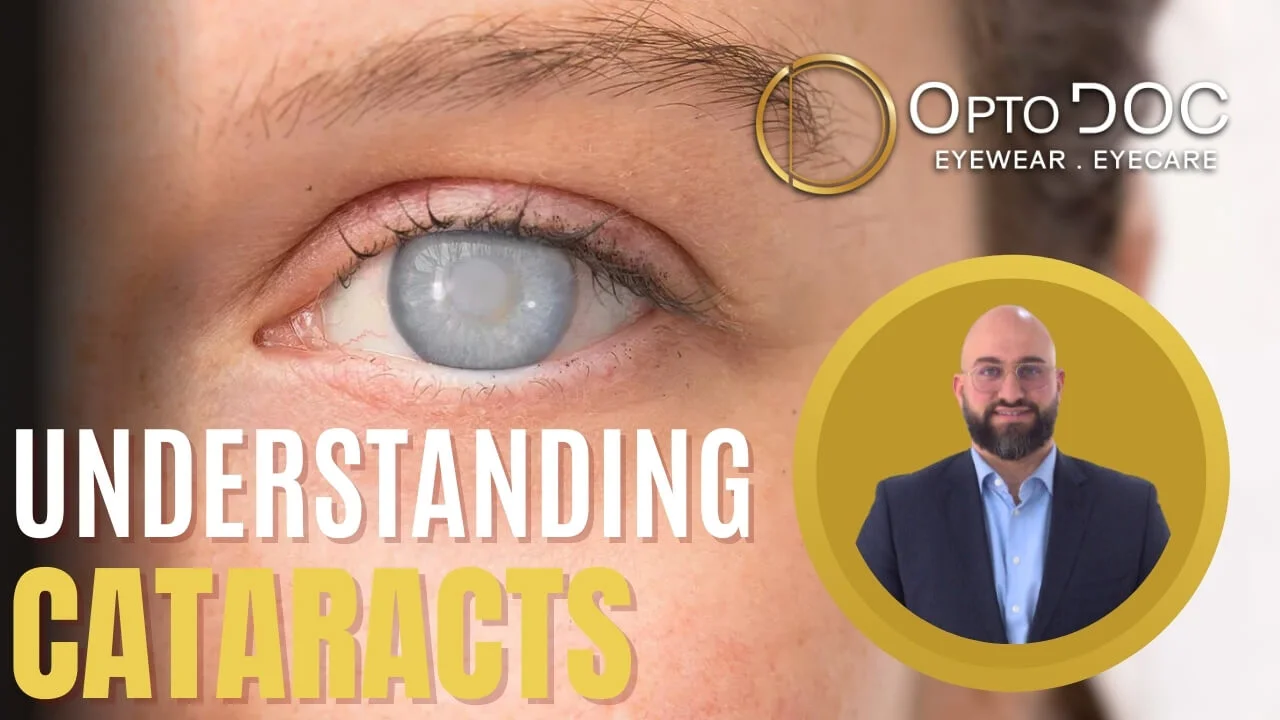
Understanding Cataracts: Causes, Symptoms, and Treatment
Cataracts are a common eye condition that can significantly impact your vision and quality of life.

How Your Eyes Change As You Age: What to Expect and How to Protect Your Vision
In today’s digital age, many of us spend hours in front of screens, whether it’s for work, study