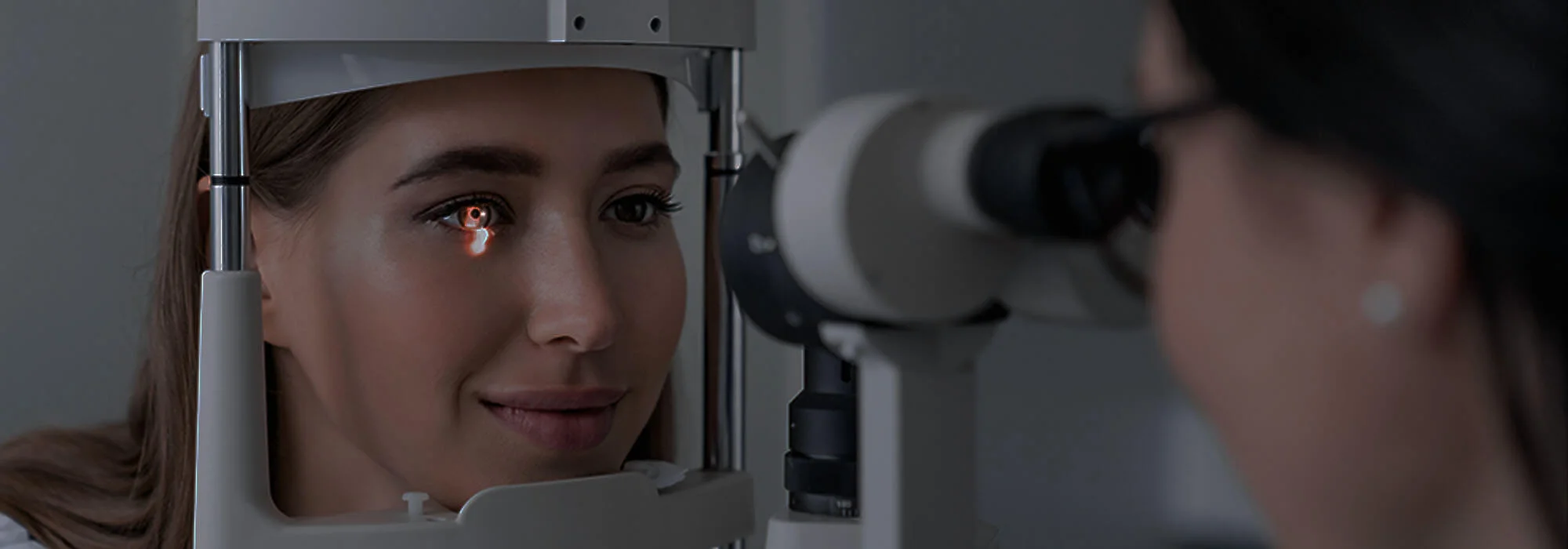
Have you noticed that your eyes seem drier, itchier or more irritated as the seasons change?
Maybe your eyes feel gritty when you wake up. Perhaps they water when you’re outside in the cold, or your contact lenses suddenly don’t feel as comfortable as they did a few months ago.
If this sounds familiar, you’re not imagining it.
Changes in temperature, humidity, wind and indoor heating can all affect the delicate surface of your eyes. As fall turns into winter, those changes can become especially noticeable here in Fort McMurray.
So, what’s happening to your eyes when the seasons change—and what can you do to help?
Why Do Your Eyes Feel Different When the Seasons Change?
Your eyes are constantly interacting with the environment around you.
The surface of your eye is protected by a thin layer of tears called the tear film. This layer helps keep your eyes comfortable and also contributes to clear vision.
When the environment changes, your tear film can be affected.
Cold temperatures, dry air, wind and indoor heating can all increase the amount of moisture your eyes lose to the surrounding air.
The result?
Your eyes may start feeling dry, irritated or tired.
Winter Air Can Be Especially Dry
One of the biggest changes that comes with winter is the amount of moisture in the air.
Cold outdoor air can be very dry. Then, when you go inside, your home’s heating system warms that air, often creating an environment with relatively low humidity.
Your eyes can lose moisture more quickly in these conditions.
You may notice:
- Dry or gritty eyes
- Burning or stinging
- Redness
- Watery eyes
- Blurry or fluctuating vision
- Increased sensitivity to light
- Contact lenses becoming uncomfortable
Dryness doesn’t always mean your eyes stop watering.
In fact, watery eyes can sometimes be a sign of dry eyes.
Why Do My Eyes Water When It’s Cold Outside?
It might seem strange that dry eyes would cause watery eyes, but it makes sense once you understand how your eyes respond to irritation.
When the surface of your eye becomes irritated by cold air, wind or dryness, your eyes may produce additional tears as a protective response.
Unfortunately, these reflex tears don’t necessarily provide the same long-lasting lubrication as your normal tear film.
So you can end up with an odd combination:
Dry eyes + watery eyes.
If you’ve ever stepped outside on a cold, windy day and immediately started tearing up, you’ve experienced this response.
Wind Can Make Dryness Worse
Cold weather isn’t the only factor.
Wind can increase evaporation from the surface of your eyes, making them feel even drier.
This can be especially noticeable if you’re spending time outdoors, walking, skiing, snowmobiling or participating in other winter activities.
Wind can also carry dust and other particles that may irritate your eyes.
Wearing appropriate eye protection outdoors can help provide a barrier between your eyes and the environment.
What About Indoor Heating?
After spending time outside in the cold, getting inside somewhere warm feels wonderful.
Your eyes may not feel quite as enthusiastic.
Forced-air heating systems can create dry indoor environments. If you spend several hours in a heated home, office or vehicle, you may notice that your eyes become increasingly uncomfortable throughout the day.
This can be particularly noticeable if you already experience dry eyes or spend much of your day looking at screens.
Screens and Winter Dryness Can Work Together
Winter can create the perfect combination for tired, dry eyes.
You may spend more time indoors, which can mean more time watching television, working on a computer or using your phone.
When you’re concentrating on a screen, you tend to blink less frequently.
Less blinking means your tear film isn’t being refreshed as often.
Combine that with dry indoor air, and your eyes may feel considerably worse by the end of the day.
What Can You Do to Help Your Eyes This Winter?
Fortunately, there are several simple things you can try.
Remember to Blink
When you’re concentrating on a screen, make a conscious effort to blink fully and regularly.
If you’ve been working for a long time without looking away from your computer, take a moment to close your eyes and blink several times.
Take Breaks From Screens
Give your eyes opportunities to look farther away throughout the day.
The 20-20-20 rule can be helpful:
Every 20 minutes, look approximately 20 feet away for at least 20 seconds.
This gives your eyes a short break from continuous close-up work.
Consider a Humidifier
If the air inside your home is particularly dry during the winter, a humidifier may help increase the humidity in your environment.
This can be especially useful in rooms where you spend a lot of time.
Protect Your Eyes Outdoors
When you’re outside in cold or windy weather, sunglasses or appropriate protective eyewear can help reduce direct exposure to wind and environmental irritants.
Even when it’s cold, remember that UV exposure doesn’t disappear in winter.
Snow can also reflect significant amounts of sunlight, making eye protection particularly important during outdoor winter activities.
Stay Hydrated
Your overall hydration can also contribute to how comfortable you feel.
Make sure you’re drinking enough fluids throughout the day, particularly when you’re spending time in heated indoor environments.
Consider Artificial Tears
For some people, lubricating eye drops may help relieve dry-eye symptoms.
There are many different products available, and not every eye drop is right for every person.
If you’re regularly reaching for eye drops, it’s worth discussing your symptoms with an eye-care professional rather than simply trying one product after another.
What If You Wear Contact Lenses?
Seasonal changes can be particularly noticeable if you wear contact lenses.
Dry air and reduced tear-film stability may make lenses feel less comfortable, particularly toward the end of the day.
You may notice that your contacts feel fine in the morning but become irritating after several hours.
If this happens regularly, don’t assume that you simply have to put up with it.
Your optometrist can assess your eyes and discuss whether your current contact lenses, wearing schedule or eye-care routine is still appropriate.
When Should You Have Your Eyes Checked?
Occasional dryness during a cold, windy day isn’t necessarily a reason to worry.
But persistent or worsening symptoms shouldn’t simply be written off as “winter eyes.”
Consider scheduling an eye examination if you experience:
- Frequent or persistent dryness
- Regular blurry or fluctuating vision
- Eye pain
- Significant redness
- Sensitivity to light
- Contact lenses that are becoming increasingly uncomfortable
- Symptoms that interfere with work or daily activities
- A need to use eye drops frequently to stay comfortable
An eye examination can help determine whether environmental dryness is the main issue or whether another condition could be contributing to your symptoms.
Your Eyes Have to Adapt to Every Season
Your eyes don’t experience summer, fall, winter and spring in exactly the same way.
Temperature, humidity, wind, sunlight, indoor heating and changes in your daily habits can all influence how your eyes feel.
So if your eyes seem drier as winter approaches, you’re not imagining it.
The good news is that there are ways to make your eyes more comfortable.
Small changes—like taking screen breaks, blinking regularly, protecting your eyes outdoors and managing indoor humidity—can make a difference. And if those steps aren’t enough, your optometrist can help determine what else may be contributing.
At OptoDoc, we can assess your eye health, talk through your symptoms and help you find solutions that fit your lifestyle.
Because winter is hard enough without your eyes feeling uncomfortable too.
If seasonal dryness is becoming a regular problem, book an eye exam with OptoDoc and let us help you find a more comfortable way through the season.
Book Your Eye Exam at OptoDoc
Learn more about eye exams at OptoDoc in Fort McMurray.
Further reading: National Eye Institute: Dry Eye.