“Can you read the next line?”
If you’ve ever had an eye exam, you’ve probably heard that question more than once.
While reading letters from a chart may seem simple, there’s actually a lot more happening than most people realize.
At OptoDoc, those tiny letters provide valuable information about your vision and eye health.
The eye chart isn’t a test you pass or fail—it’s a tool that helps us understand how your eyes are performing.
What Is the Eye Chart Measuring?
The chart helps measure something called visual acuity.
Visual acuity refers to how clearly you can see details at a specific distance.
When people talk about having “20/20 vision,” they’re referring to visual acuity.
Why Start With Big Letters?
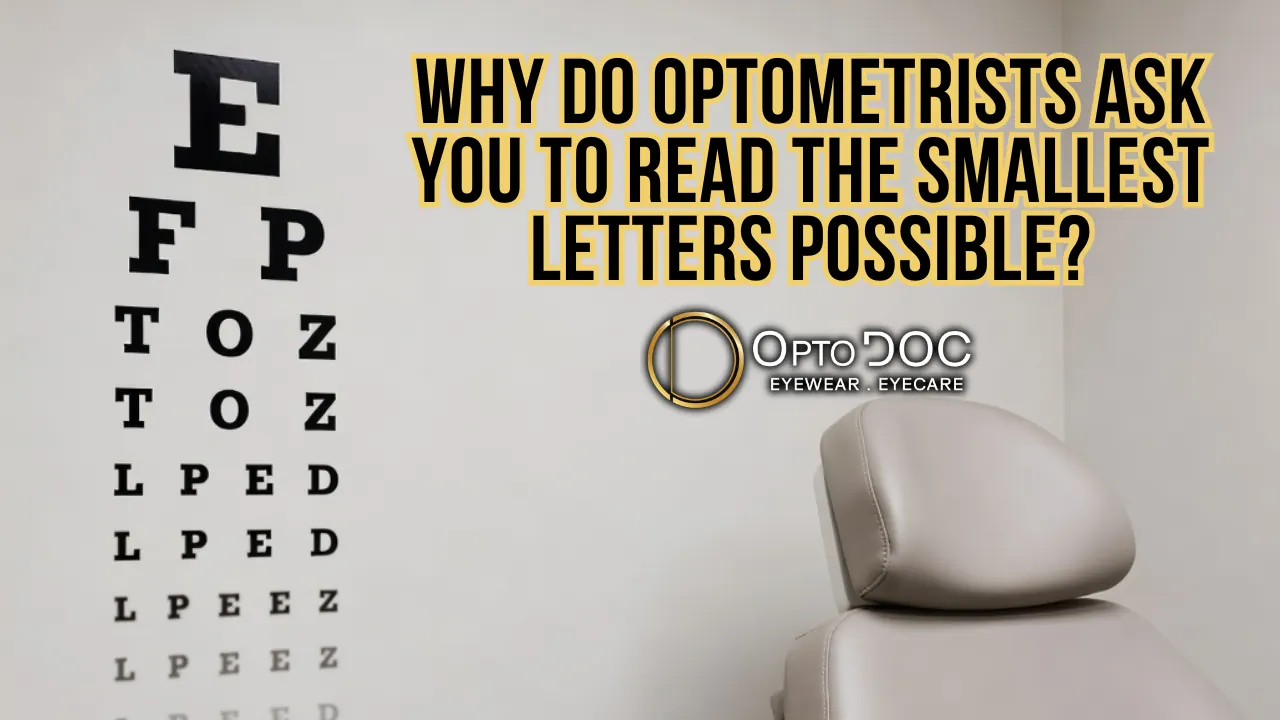
The larger letters help establish a baseline.
As the letters become smaller, your optometrist can determine where your vision begins to struggle.
This helps identify how well your eyes are focusing and whether corrective lenses may be needed.
It’s Not Just About Getting Every Letter Right
Many patients think they’re being graded.
You’re not.
Even mistakes provide useful information.
The goal isn’t perfection—it’s understanding how your eyes are seeing.
Vision Is More Than Reading a Chart
Although the chart is important, it’s only one part of a comprehensive eye exam.
Your optometrist also evaluates:
- Eye coordination
- Focusing ability
- Peripheral vision
- Eye health
- Signs of disease
- Prescription accuracy
Many eye conditions develop without obvious symptoms. That’s one reason regular eye exams are so important.
Why the Smallest Line Matters
The smallest line you can comfortably read helps determine whether your current prescription is still meeting your needs.
Even small changes in vision can affect reading, driving, screen use, and everyday comfort.
How Often Should You Have Your Eyes Checked?
Regular eye exams help ensure changes in vision are caught early.
They also help detect eye health concerns that may not affect your vision right away.
How OptoDoc Can Help
At OptoDoc, we provide comprehensive eye exams that go far beyond the eye chart.
Our goal is to help you achieve clear, comfortable vision while protecting your long-term eye health.
The next time you’re reading those tiny letters, you’ll know there’s a lot more to the test than meets the eye.
Book Your Eye Exam Today!








Leave a Reply