Driving during the day can feel completely normal.
Then the sun goes down.
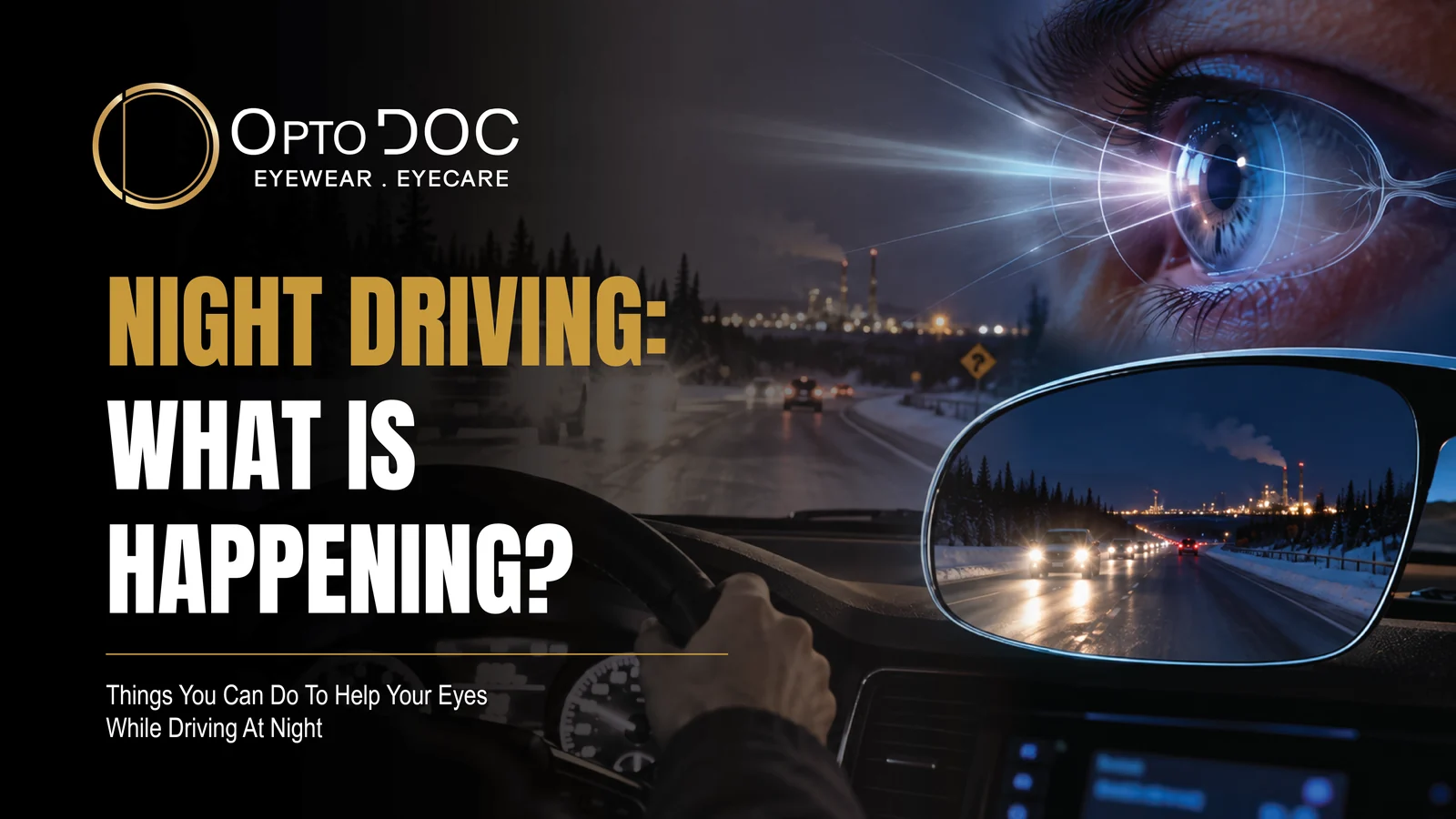
Suddenly, headlights seem brighter, road signs are harder to read and everything around you seems to have less contrast.
If night driving has become more difficult or tiring, you’re not imagining it. Your eyes work differently in low-light conditions, and several factors can make nighttime vision more challenging.
For drivers in Fort McMurray, shorter winter days can make this especially noticeable.
So what’s actually happening to your eyes at night—and what can you do about it?
Why Is Night Driving Harder?
Your eyes have less light to work with at night.
In bright conditions, you have plenty of visual information. Colours, road markings, signs and objects are easier to distinguish.
At night, contrast is reduced and your eyes have to work harder to identify details.
At the same time, you’re surrounded by individual sources of bright light: headlights, streetlights, illuminated signs and reflections.
That combination of darkness and bright light can be challenging.
Why Do Headlights Look So Bright?
One of the most common complaints about night driving is glare.
You may notice:
- Headlights look unusually bright
- Lights have halos around them
- Headlights appear starburst-shaped
- Your eyes hurt after driving
- It takes longer to see after an approaching vehicle passes
Some glare is normal, but if it is becoming significantly worse, it’s worth discussing with your optometrist.
Your Prescription Could Be Part of the Problem
A small change in your prescription may not be obvious on a bright sunny afternoon.
At night, however, reduced contrast and low light can make vision imperfections more noticeable.
You might find yourself thinking:
“I can see perfectly well during the day. Why can’t I drive comfortably at night?”
Your prescription may be part of the answer.
An eye exam can assess whether you need an updated prescription and whether there are other factors affecting your nighttime vision.
Astigmatism and Nighttime Glare
Astigmatism can affect the way light is focused inside the eye.
For some people, this can make bright lights against a dark background appear distorted, stretched or surrounded by glare.
If headlights look unusually streaky or star-shaped, mention it during your eye exam.
Dry Eyes Can Affect Night Vision Too
Your tear film plays an important role in clear vision.
When the surface of your eye becomes dry or irregular, light may not be focused as cleanly.
Dryness can become more noticeable later in the day, after long periods of screen use or in dry environments.
For Fort McMurray drivers, cold outdoor air and dry indoor heating during winter can add to the challenge.
What About Your Glasses?
Your lenses matter too.
Dirty or scratched lenses can make glare and reflections more noticeable.
Before a night drive, make sure your glasses are clean.
If your lenses are heavily scratched or the coatings have worn down, it may be time to discuss replacement options.
Can Anti-Reflective Coatings Help?
Anti-reflective, or AR, coatings are designed to reduce reflections from the surfaces of your lenses.
For people who frequently deal with artificial light sources, including headlights and streetlights, an appropriate anti-reflective coating may improve visual comfort by reducing distracting reflections.
It won’t eliminate headlights or magically give you perfect night vision—but it can be one part of a broader lens solution.
Your optician can help determine whether an anti-reflective coating makes sense for your prescription and lifestyle.
What Can You Do to Make Night Driving More Comfortable?
Keep Your Windshield Clean
A dirty windshield can scatter light and make glare worse.
Clean both the inside and outside of your windshield regularly.
Keep Your Glasses Clean
Fingerprints and smudges can also create distracting reflections.
Check Your Prescription
If you find yourself squinting, struggling with signs or noticing a change in nighttime vision, schedule an eye exam.
Give Yourself Extra Time
If visibility is reduced by weather, glare or darkness, give yourself additional space and adjust your driving accordingly.
Reduce Unnecessary Glare
Keep dashboard lighting at a comfortable level and avoid looking directly into approaching headlights.
When Should You Have Your Eyes Checked?
Make an appointment if you notice:
- A significant change in nighttime vision
- Increasing difficulty driving after dark
- New or worsening glare
- Halos around lights
- Difficulty reading signs
- Double vision
- Blurry vision that doesn’t clear
- A noticeable difference between your daytime and nighttime vision
Night vision changes can have several possible causes, so an eye examination is the best way to understand what’s happening.
See Clearly—Day and Night
Your eyes don’t experience the road the same way during the day as they do at night.
Low light, reduced contrast, glare, dryness, prescription changes and the natural changes that happen to our eyes over time can all influence nighttime vision.
The good news is that some of these factors can be addressed.
At OptoDoc, we can assess your vision and help you explore solutions ranging from an updated prescription to lens options such as anti-reflective coatings.
Because your glasses should be designed around the way you actually live—including those dark Fort McMurray drives home.
If nighttime driving has become harder than it used to be, book an eye exam.
Book Your Eye Exam at OptoDoc
If you cannot see well enough to drive safely, avoid driving and arrange an eye examination. Sudden vision changes or eye pain need prompt assessment.
Learn more about eye exams at OptoDoc in Fort McMurray.