



What Does an Eye Chart Actually Measure?
Weāve all seen itāthat classic chart with rows of letters that get smaller and smaller. But have you ever wondered what that eye chart really tells us about your vision? At OptoDoc, we believe in educating our patients so you feel confident and informed about your eye health. So, letās decode the humble eye chart.
The Snellen Chart: A Vision Benchmark
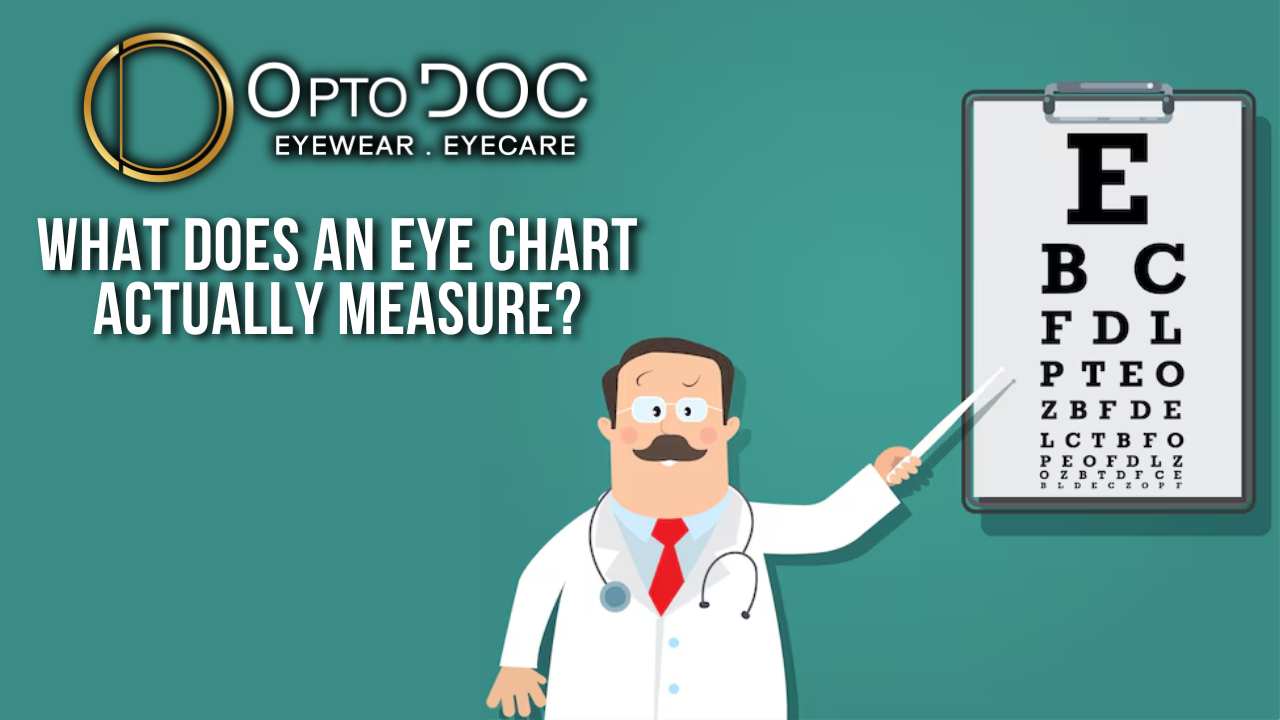
The most commonly used eye chart is called the Snellen chart, developed in the 1860s. Itās designed to measure visual acuityāwhich is your ability to see fine details at a specific distance, typically 20 feet.
If youāve ever heard the phrase ā20/20 vision,ā this is where it comes from. If you can read the line marked 20/20 from 20 feet away, it means you have average, or “normal,” visual acuity.
What Eye Charts Donāt Measure
While helpful, an eye chart is just one piece of the puzzle. It doesnāt measure:
- šļø Peripheral (side) vision
- šÆ Eye coordination or tracking
- šØ Colour perception
- š Depth perception
- ā ļø Signs of underlying eye disease
Why Eye Charts Still Matter
Despite their limitations, eye charts are a great screening tool. They help optometrists quickly identify whether you may need corrective lenses or further testing. They also help monitor changes in vision over timeāespecially useful for children, seniors, and patients with chronic conditions like diabetes.
Eye Exams at OptoDoc: More Than Just a Chart
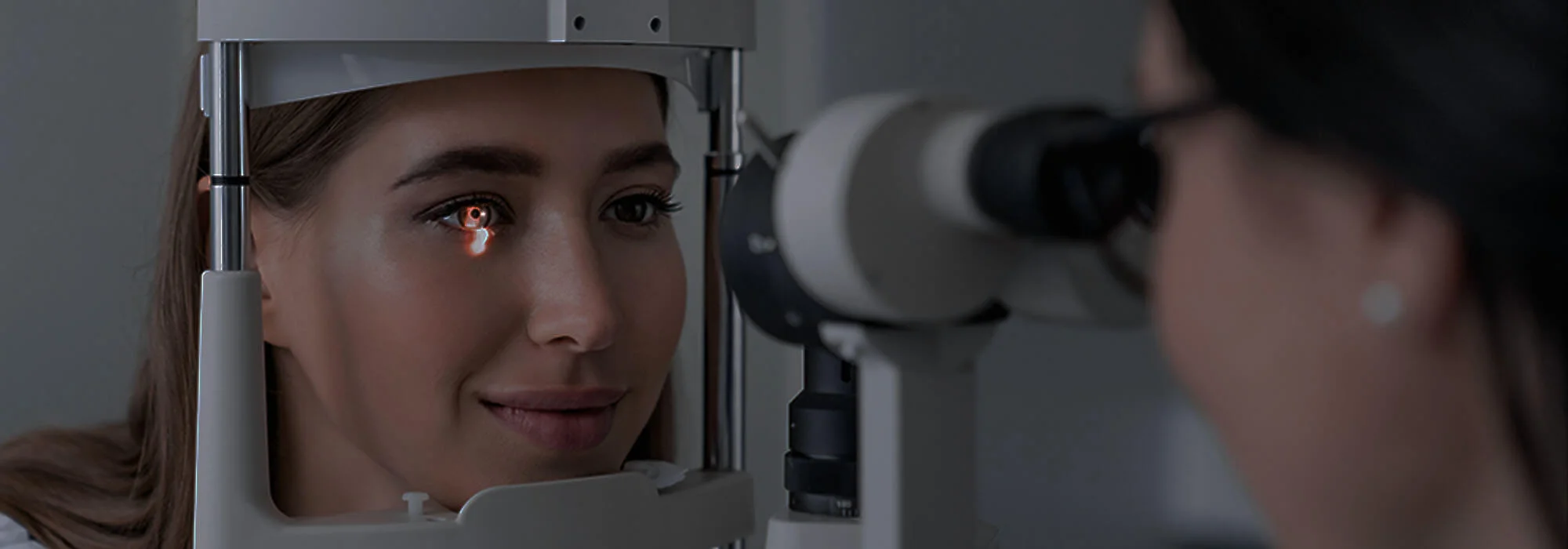
At OptoDoc, our comprehensive eye exams go well beyond the Snellen chart. We use advanced diagnostic technology to assess your entire visual system, from visual acuity to retinal health. Our goal is not just to help you see clearlyābut to catch issues early and keep your eyes healthy for life.
The Pros and Cons of Daily Disposable Lenses
Is the convenience worth the cost? Letās take a closer look at whether daily disposables are the r
How eye pressure is measured
Eye pressure, or intraocular pressure (IOP), is the fluid pressure inside your eye. Maintaining a he
The Link Between Diabetes and Your Eyes
Did you know that anyone with type 1 or type 2 diabetes can develop diabetic retinopathy; this occur


Leave a Reply